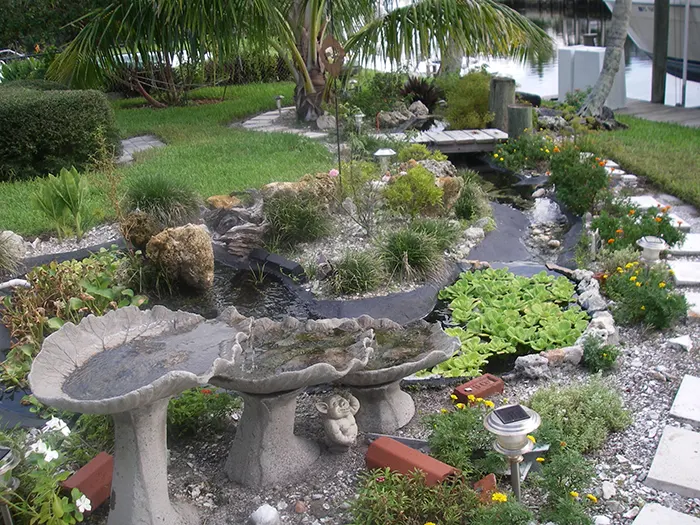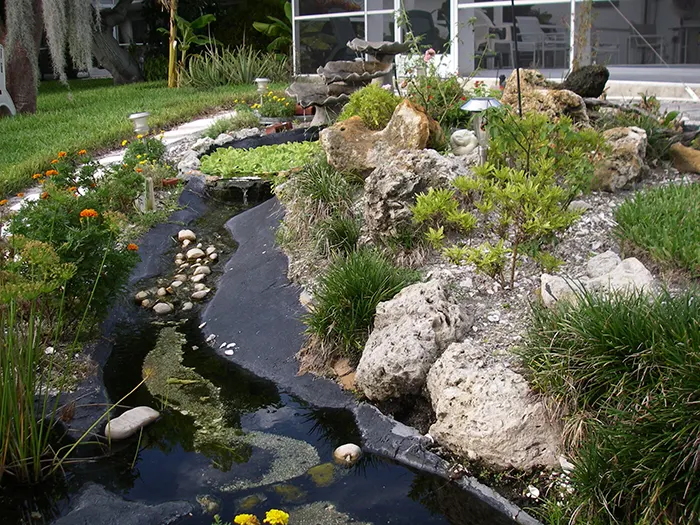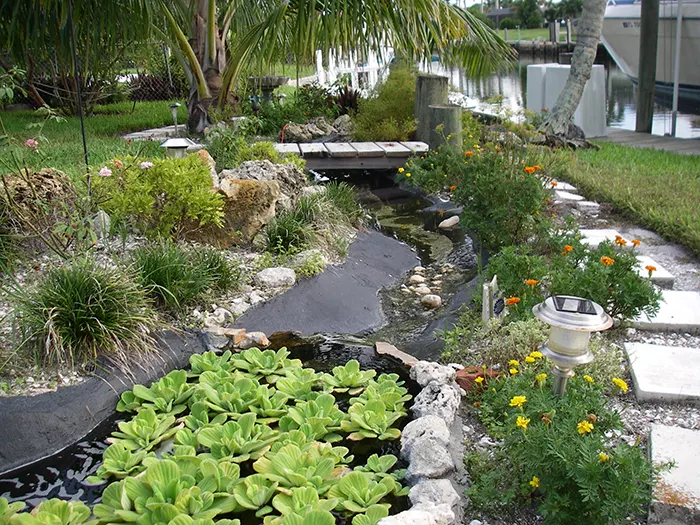

Creating a water feature in your yard used to be difficult back in the day when lath and plaster or concrete were used for construction. We now have pre-formed pools and pond liners that make for a weekend job. A water feature is an attractant for birds and other wildlife and can be relaxing when the water is moving creating a peaceful sound.
The first step is to decide where you want to locate the water feature. You will want to be able to see it from a deck, patio or windows from inside the house so that you can enjoy watching the wild life that will be attracted to the yard. Also, place it so you can hear the gurgling of the water for the peaceful vibe.
If using a preformed pool use a piece of rope or hose to outline the pool edges to the ground. Next excavate the hole while following the profile of the pond including any interior shelves. Place the pond into the hole occasionally to check the fit. Make the hole a bit larger than the pond which will make back filling easier. To check the depth of your hole lay a piece of wood across the opening and measure to the bottom. Then place your pool into the hole and check that it is level with the land around it. If you have rocky soil you may want to add a shallow layer of sand to create an even surface for the pool. Now it is time to add water and begin packing soil around the edge. Packing the soil as you fill the pool with water will ensure the levels of the pool remain true to the original shape being especially vigilant under the shelves of your pool. Be sure your back fill does not raise the levels of the edges around your pool.
If you decide you would rather create a free form water feature there are now pond liners you can use. Once again create the shape of your water feature using rope or a hose. Excavate the soil to the desired depth leaving a shallow ledge about half the depth of the pool. You can use the excavated soil to create raised garden beds to make your water feature look more natural. Or you can remove the grass from around the hole to allow for pavers creating a neat edge. Now remove any sharp stones or roots sticking out of the soil and place a cushion of ½ inch of sand on the bottom of the excavated hole. If you have a very rocky soil you can purchase a polyester matting material designed for the job of protecting the pond liner. Now it is time to place the liner in the hole. Drape it loosely in the hole making sure there is sufficient overlap all around. Hold the edges in place with rocks or bricks. Fill with water while lifting the bricks occasionally to allow the liner to settle into the hole. Remove any creases by stretching and adjusting the liner as it fills. Once the pond is full, cut off the extra liner leaving at least 6 inches all the way around. This will be covered and held in place by the pavers or pins and excess dirt used to create your gardens.
My late husband, Peter, built a magical pond and stream creation in our back yard over 20 years ago using the old lath and plaster method. Our waterfront back yard had just the right slope for a running stream with waterfalls along the way. He dug an upper pond which connected to a lower pond with a winding stream that included mini rapids and several small waterfalls. The water was circulated back to the top using a pump in the lower pond which brought the water back to the upper pond via underground pipes. Unfortunately, several hurricanes damaged the plaster liner causing serious leaks. While still an interesting landscape feature, it has not been a working water feature for over a decade. I plan to resurrect it using flex seal paint to repair the cracks and look forward to the sound of gurgling water and the wildlife it will attract.
If you want to add plants to your water feature there are many aquatic plants you can purchase. You simply use an old tub or plant them in the containers they come in. There are special planting baskets that you can line with burlap or a special liner to hold in the soil. After planting with soil cover the surface with gravel to hold the plants in place until they have a chance to root. Place them in the shallow areas of your pond. There are also floating plants like water lettuce that your simply place in the water. Be careful not to buy or accept from a well-meaning friend invasive water plants. That is the equivalent of taking invasive cuttings of landscape plants. You will regret it as they spread uncontrollably and take over your water feature.
If you decide to add fish do not release them into the pond before floating the bag in the pond water for a couple of hours to equalize the temperature of the bag and the pond. And do not leave them in the bag too long as the oxygen can be depleted starving the fish of their much needed oxygen.
So if you have always wanted a backyard pond next weekend might be a great time to get it done. Happy excavating!