
Category: Plants

  • Landscaping

    Landscaping

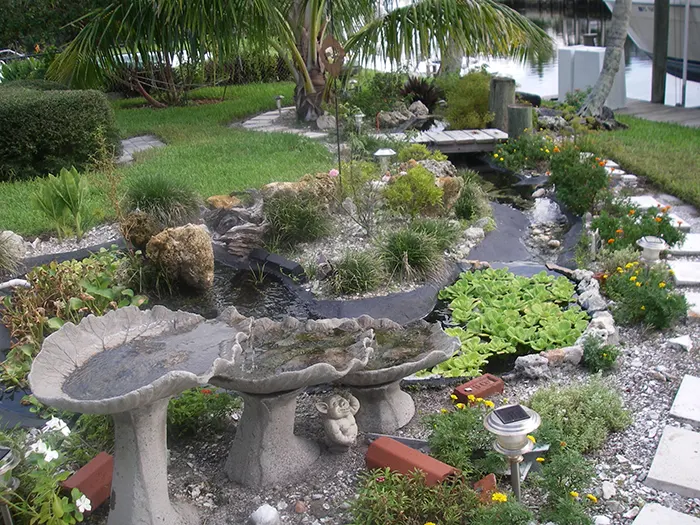
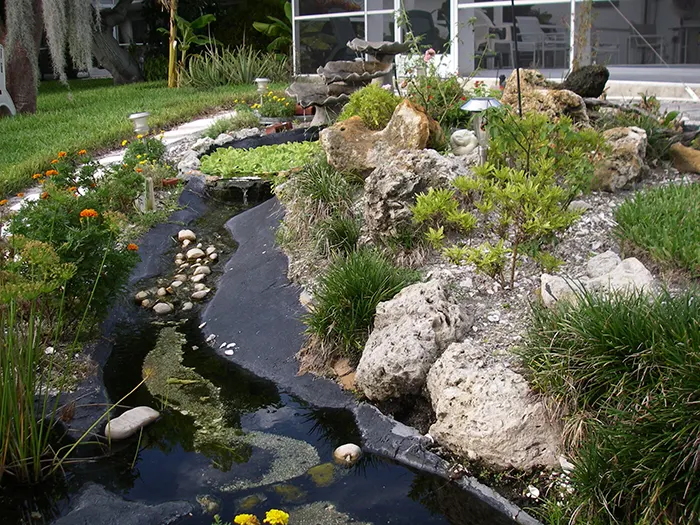
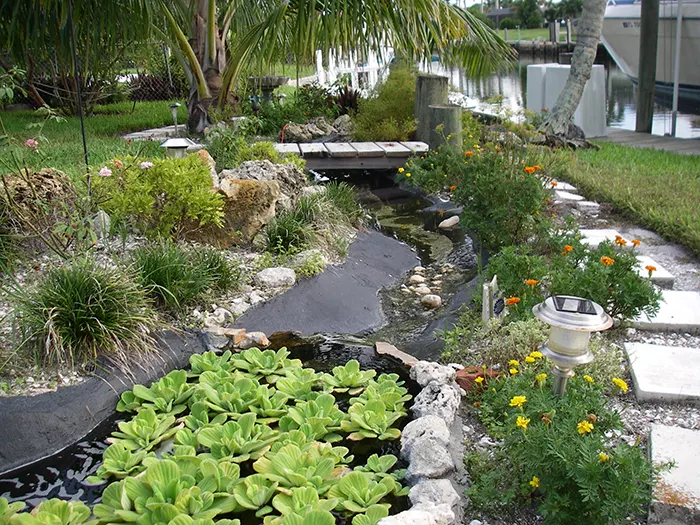
    When it comes to landscaping, simplicity equals good design and low maintenance. Low maintenance landscapes are designed so that every shrub, tree and flower-bed will all have definite functions. It is best not to over plant and to eliminate as many frills and flower beds as possible. Fewer, well placed gardens help reduce landscape maintenance.
     Arrange your plants in masses. Scattered plants need edging and weeding and can complicate mowing. Avoid planting grass where it is too shady, dry, wet or too steep to be safely mowed. Use ground cover or other plants in these areas. Mulches help to minimize weeds and help retain moisture. Use gravel, bark or pine straw and occasionally pull or spray weeds that come up. Don’t over fertilize. It isn’t a good horticultural practice and results in more pruning or mowing. It also invites insects to all the tender new growth.
    A bed around trees eliminates trimming and speeds mowing. It will help to protect the bark from damage by the lawn tools. Make the beds wide enough so you don’t run into low hanging branches when mowing. Define borders of walks, driveways and beds more clearly with metal, wood or brick edging. This also helps keep stones and mulch in place and the grass from growing into walks, etc. thus reducing trimming. Create paths with gravel, stepping stones or paving where foot traffic is heavy. Be sure walks and gates are wide enough for the lawn maintenance equipment. Power equipment speeds maintenance time.
    Use fences or hedges for privacy or a wind break. A fence would require less space than shrubs or you can select plants which are low maintenance. When planting a vegetable garden only grow what your family can use. Allow enough room between rows for easy cultivation. Power tilling would save hours of hand work. Narrow beds are easier to weed in the center. Large masses of annuals give you bold color with less maintenance.
    Prune trees so the wind can move through them and so more light reaches the grass through the thinned branches.
    Native plants are suited to our local climate and soil and are less susceptible to pest problems making them lower maintenance. Use plants with few insect and disease problems and those that are slow growing for less pruning. Buy quality plants. Replanting or treating sickly plants takes time and money. Inspect your plants before you buy them. Shop at reputable nurseries and garden centers that are neat and well cared for. Don’t buy plants with excessive new growth or with scarred, cracked or peeling trunks or branches. Plants should be compact and not leggy. Inspect leaves for proper shape, size and color and examine them for insects or disease problems. Make sure the root system is not growing out of the pot.
    Nothing is more important than good planting practices. Prepare your planting hole with water, fertilizer and any necessary amendments. Be sure your plant is in a site it prefers. Practice preventative maintenance. Keep plants and lawns well fed and watered and they will be vigorous and healthy. This is the best way to prevent problems which in turn increase maintenance needs.
  • Citrus Tree

    Citrus Tree

    A lot of Marco Island homes have citrus trees in the yard.  Unfortunately, the hurricanes this summer have damaged many of them.  Citrus is not salt tolerant.  Most trees suffer no damage from salt water even though they are in back yards next to canals.  But the constant tropical storm winds carried enough salt in the air to coat the trees with salt and burn the branches and foliage.  If your citrus trees appear to have a lot of dead wood facing the water this is why.  You can have the dead wood trimmed back to healthy, green wood to encourage new growth on the damaged side.  Also, January is one of the months to fertilize citrus so be sure you don’t miss this chance to fertilize.  And to encourage regrowth you may want to lightly fertilize every month through the summer avoiding the time when the tree is flowering.

    The planting and care of citrus trees is very important. Many do not survive due to a lack of understanding of proper care.

    Citrus need full sun and anything less will affect the growth and production of the trees.  Appropriate spacing is necessary as most citrus trees are rapid growers and large round trees.  Plant citrus trees at least 20 to 25 feet apart to allow for mature growth.  Citrus trees should be planted at least 15 feet from buildings or other large ornamentals.

    Before planting clear the area of all grass and weeds.  Add 4 to 5 shovelfuls of organic matter like peat moss or manure to amend sandy soils. Citrus trees will not tolerate sitting in wet soil so avoid planting in boggy areas unless you raise the soil level by building a planting bed.

    Citrus can be planted any time of the year but late winter to early spring is the best time.  Make sure the tree you select is healthy with a nice straight trunk.  If it is diseased or insect infested, or if the roots are coming out of the drain holes indicating a potbound tree, leave these at the nursery.  When ready to plant remove the tree from the growers pot and check for roots which are spiraling around the root ball.  Gently pull these roots free so they protrude from the ball.  If the tap root is coiled at the bottom soak the root ball for several hours in water to allow for some straightening of the tap root and any other badly coiled roots before planting.

    Dig the planting hole large enough that you can spread the roots out if necessary.  Set the plant slightly higher than it grew in the container making sure the bud union (or grafting site) is at least 6 inches above the soil line.  This area of the tree is very vulnerable to infection of foot rot, a soil fungi which are splashed onto the susceptible area.

    Backfill half the hole and compress the soil to remove air pockets.  Water to help settle the soil around the roots and finish filling the hole.  Form a water basin around the tree by making a ring of soil 4 to 6 inches high to allow for adequate watering while the tree is young.  Do not mound the soil around the base of the tree!  Leave the water basin for six months to a year.

    Water your new tree two to three times a week for the first month and then twice a week for the next month.  Taper off to a thorough watering once a week if there has not been adequate rainfall.

    The only pruning necessary on a citrus tree is to remove sprouts or suckers from the trunk or to remove dead wood or crossing branches which could cause damage to the other branches.  Also low hanging branches to allow air flow under the tree.

    Do not fertilize your new tree until it shows signs of new growth.  Spread the fertilizer evenly in your water basin the first year and then enlarge the area after that to cover an area twice the diameter of the tree canopy and water in thoroughly.  Use a balanced citrus special fertilizer with the necessary minor elements four to five times a year the first year.  The first application should be in February and the last in September.  The second year fertilize four times and three times thereafter in January, June and October.

    Citrus can suffer many insect and disease problems.  Listed below are some of these problems.

    Keep the area beneath the canopy free of weeds to the drip line.  The herbicide Round-up is safe for use under citrus.  If you chose to cultivate your weeds keep it shallow as the citrus tree has shallow and widespread feeder roots.  Mulching citrus is not recommended as it can increase the chance of infection by the soil borne fungi which cause foot rot.

    Foot rot is a leading cause of death for dooryard citrus.  This destructive soil borne disease of citrus is encouraged by high soil moisture, planting too deeply, mulching or too many weeds under the canopy of the tree.  Foot rot lesions develop at or just above the bud union and on the bark of the crown roots.  The first sign of infection is drops of gum on the bark.  The bark near the lesion will be brown and slippery.  As the dead bark dries it shrinks and splits, eventually sloughing off and girdling the tree.  The part of the tree fed by the damaged bark dies and so the disease progresses.

    Another common disease of citrus roots is root rot which causes the destruction of the shallow feeder roots mentioned earlier.  Roots infected with this disease will have decaying outer tissue which easily slides off the root.  If new roots don’t regenerate quickly enough the tree starves to death.  Root rot may have no above ground symptoms.  Often the tree will look good one week and be dead the next.

    Cultural practices to follow to avoid these diseases in your citrus trees are as follows:

    • Prune low hanging branches to allow good air circulation and light under the canopy.

    • Plant new trees at or above the level they were in the container – never lower.

    • Keep soil, weeds and brush away from the base of the tree.

    • Avoid mulching which causes high soil moisture.

    • Use chemical rather than mechanical weed control to avoid damaging the trunk and feeder roots.

    You can try to control or slow the progression of the disease on older trees with chemicals if you catch it in the early stages of the disease.  First remove the soil from the base of the trunk and crown (top) roots in an area one to three feet in all directions.  Washing with a low pressure hose is a good way to accomplish this.  Second, remove all diseased tissue including about an inch of healthy tissue beyond.  Third, drench with a systemic fungicide specific for phytophtora.

    Some insects which affect citrus are mites, scale, whitefly, mealybugs, aphids and caterpillars.  There are many beneficial enemies of all of the above pests and they do a good job of keeping these pests under control so you can avoid using chemicals on your trees.  Parasitic wasps, ladybeetle and lacewing larvae, and adult ladybeetle are some of the more common beneficial insects to watch for.  If you should need to spray, Malathion is a good choice for citrus.  Two parasitic fungi infect immature whitefly.  Red Aschersonia form pink and reddish pustules 1/8 inch or less on the underside of the leaves.  It is very colorful and noticeable.  Acgerita or brown whitefly fungus appears as cinnamon pustules also about 1/8 inch diameter on the underside of leaves.  This fungus is often thought to be Florida red scale.  There are other fungi which attack citrus mites, especially in the summer.

    Sooty mold is caused by insect honeydew left on the leaves while feeding.  Controlling these insects will prevent this and an oil spray will help the fungus flake off cleaning the fruit and leaves.  Scab, melanose and greasy spot are all diseases of fruit and leaves of citrus trees.  Copper fungicide sprays will bring these diseases under control if they get out of hand.

    It is best to depend entirely on natural control of insects and disease on your citrus trees.  Many are never sprayed and yet the trees survive and produce good crops of satisfactory fruit.

    There are several other problems homeowners may experience with their citrus trees.  Blossom and fruit drop may just be the tree ridding itself of excess fruit or it could be the result of improper fertilizing.  Be sure to fertilize three times a year with a quality citrus fertilizer.  Do not fertilize while the tree is flowering as the nitrogen can cause the blossoms to fall off.  If you are late with your January fertilization wait until the fruit has formed and set before you fertilize.  Improper watering during the dry spring months when the tree is flowering and setting fruit is another cause of blossom drop.  Be sure to provide irrigation at regular intervals during the dry months.  And strong winds will cause blossoms and small fruit to drop.

    Granulation of citrus fruit causes enlarged, hardened and colorless juice vessels.  Several factors can contribute to this problem.  Young trees are more likely to have this problem than older trees and large fruit more than small.  Leaving the fruit on the tree too late in the season.  High soil moisture.  This condition may be inherent to particular trees as it tends to recur in the same trees year after year.

    Fruit splitting can be a problem in September and October.  Nutritional deficiencies, especially copper, can contribute to this problem.  Or after a series of heavy rains, especially following drought, the tree takes up a lot of moisture and forces it into the fruit.  The fruit is nearing maturity and the rind has become less pliable and splits.  To prevent splitting on future crops use a balanced fertilizer program and make sure you irrigate uniformly during the growing season.

    Citrus canker and citrus greening are two very serious diseases of citrus and I will go into more detail in a later column on these diseases.

    Citrus canker is a serious disease of citrus especially for commercial growers.  It causes unsightly lesions, premature fruit drop and can weaken and kill a tree.  The only sure way to get rid of canker is by destroying infected or exposed trees.  This disease has been discovered in many groves in our area and also in backyards in Golden Gate.  State or federal inspectors may request access to your property to examine your citrus trees if canker is discovered in our area.  They will be from the U.S. Department of Agriculture or Florida Department of Agriculture and Consumer Services.  They will inspect the trees and take samples if canker is suspected.  If the tree is infected it must be destroyed.  Your trees will also be destroyed if they were purchased from a nursery exposed to canker.  This is a necessary evil to protect our commercial citrus groves.

    This disease is highly contagious and can be spread by wind driven rain, lawn mowers, pruning tools, animals and people and the movement of infected plant materials.  As a lawn care company we recently received a notice of quarantine area from the Fl. Dept. of Ag. & Consumer Services.  Within this area they regulate businesses whose activity may result in the spread of canker.  There are special regulations regarding disinfection of personnel, vehicles and equipment and special handling and procedures for moving and disposing of plant clippings and yard debris.  In order to work inside the quarantine area (they provide you with a map detailing the area) all lawn maintenance operators must enter into a May 1999 Compliance Agreement agreeing to follow decontamination procedures.  Failure to do so will result in your business being suspended from working in the quarantine area and a violation.

    The cooperation of all homeowners and horticultural workers is necessary to eradicate citrus canker from Florida so that we can continue to step out the back door for some fresh citrus off the tree.  

  • Bulb

    Bulb

    Daffodils and tulips are my favorite flowers because it was a sure sign of spring in Connecticut when they began popping up in the fields and yards. While we cannot grow daffodils or tulips this far south we do have some bulbous plants that are beautiful.

    Amaryllis

    These bulbs show pretty green leaf-like foliage in the garden most of the year. One of the most beautiful bulbs we can grow here in South Florida is the amaryllis. They come in varying shades of pinks and reds. Bulbous plants will thrive and produce these beautiful flowers year after year with proper care. These plants have thickened underground storage organs which enable them to survive unfavorable environmental conditions. These underground organs are also the propagative units of the plants. Not all bulbous plants are true bulbs. Other underground storage organs include corms, tubers, tuberous roots and rhizomes.

    Bulb Scales

    A true bulb is a compressed stem or basal plate bearing a flower bud enclosed by thick, fleshy scales called bulb scales. Some true bulbs such as narcissus, amaryllis & tulip are protected from drying and mechanical injury by dry and membranous outer scales called a tunic. Other true bulbs such as lilies are called non-tunicate or scaly because their outer scales are succulent and separate, giving the bulb a scaly appearance.

    The Corm

    A corm is a solid mass of stem tissue with a terminal bud on top. Axillary or lateral buds are also produced at nodes on the corm. The solid stem structure of the corm is protected against injury and water loss by dry leaf bases that are similar to the tunic that encloses true bulbs. Gladiolus is a corm.

    Caladium

    A tuber is a thickened underground stem with many buds on its surface. Tubers are covered with a tough skin rather than a tunic or scales like true bulbs and corms. An example of a tuber is a caladium.

    Dahlia

    Tuberous roots, such as dahlia, are true roots and lack nodes and inter-nodes. Buds are present only at the crown or stem end of the root.


    Rhizomes are thickened horizontal stems growing along or below the surface of the ground. Underground rhizomes of canna and calla produce roots on their lower surface and send shoots above ground.

    “Florida’s climate is favorable for growing many tropical and subtropical bulbous plants.”

    Florida’s Climate

    Florida’s climate is favorable for growing many tropical and subtropical bulbous plants. Unfortunately, many of the common bulbs of northern states such as tulips, hyacinths and daffodil do not grow well in Florida. These bulbs flower poorly or not at all. With special treatment many of these northern bulbs will grow and bloom the first year. Recovery and planting the following year is not recommended since they rarely flower again.

    Well-drained Soil

    Most bulbs thrive in a sunny location. Some, such as caladiums, do best in partial shade. Heavy shade should be avoided as it will cause thin spindly growth and poor foliage color and flowering. Bed preparation is important for successful bulbs. A well-drained soil is important. You should till and amend the soil with three to four inches of organic matter and fertilizer.

    Dig holes to the recommended depth for the various bulbs and plant with points facing up. Firm the soil around and over the bulbs and water.

    Water is Crucial

    Mulch the beds to control weeds. Weeds that do grow through the mulch should be pulled before they become firmly established in the bed.


    Fertilize once or twice during the growing season with a special bulb fertilizer. Bulbs such as tulips which are discarded after flowering do not need fertilizing since they have enough stored food to last through the blooming period.


    Water is crucial when growing bulbs and it is important that they not dry out during growth and flowering.


    Keep the soil moderately moist at all times except when drying off at the end of a growing period.

    Good Cultural Practice

    A good cultural practice is to remove dead blooms before seeds are produced. Flowering in the following season will be reduced if seeds are allowed to set. Removing seeds also adds to the aesthetic value of the plants and may prevent disease problems.


    Many bulbous plants grow best if left in the ground year after year while others may become crowded and bloom poorly. Digging and replanting encourages more uniform and larger flowers.


    True bulbs like amaryllis and hyacinth, develop miniature bulbs, known as bulblets, which grow into offsets. Offsets can be separated from the mother bulb and replanted into the beds. Depending on the kind of bulb, it could take several years before they reach flowering size.

    Corms & Cormels

    Corms, such as gladiolus, produce new corms on top of the old corms, which wither. Miniature corms called cormels are produced between the old and new corms. These can be separated from the mother corms and stored along with the new corms over winter for planting in the spring. Cormels also require two to three years to reach flowering size.


    Tubers (caladiums), tuberous roots (dahlia) and rhizomes (canna, day lily) are propagated by cutting them into sections, each containing at least one bud.

    Tuberous roots that are broken off without a bud are worthless.


    Bulbous plants can be moved anytime except when they are in bloom.


    Some examples of bulbs, corms, tubers, tuberous roots and rhizomes and their flowering seasons:


    Bulbs
    Amaryllis – Spring
    Amazon lily – Winter
    Aztec lily – Spring & Summer
    Blood lily – Summer
    Crinum – Spring & Summer
    Society garlic – Spring, Summer & Fall
    Spider lily – Spring & Summer


    Corms
    Gladiolus – Three months after planting
    Tritonia – Spring & Summer
    Watsonia – Three months after planting


    Tuber
    Caladium – Summer to Fall
    Glorioso lily – March to Summer
    Elephant ears – Spring


    Tuberous Root 
    Dahlia – Early Summer


    Rhizomes
    African lily – Summer & Early Fall
    Butterfly lily – Spring
    Cana – Spring to first frost
    Day lily – Spring & Summer

[yith_woocommerce_ajax_search preset='default']